
Statement of the Working Group of the National Convention on the European Union for Chapter 31
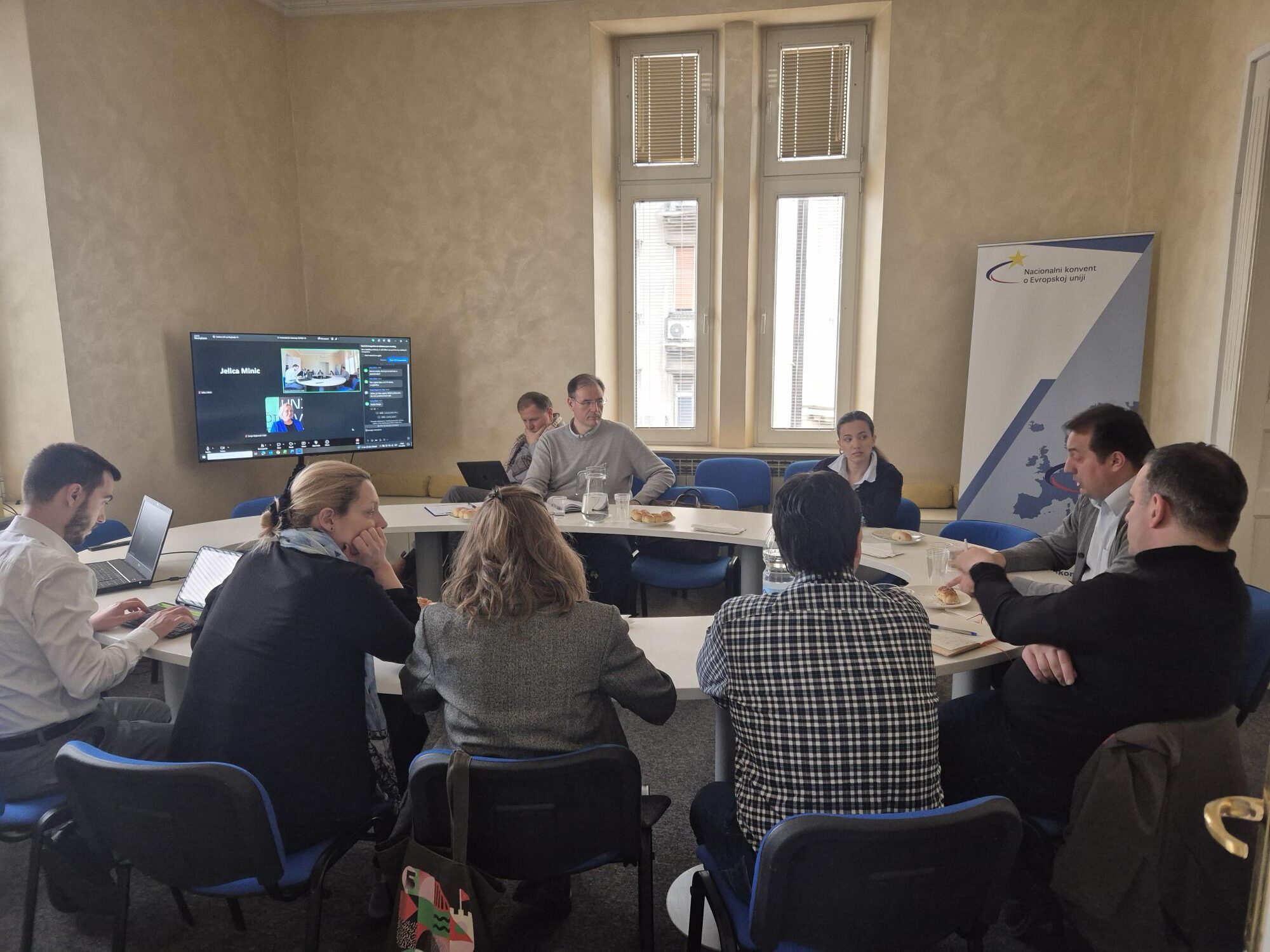
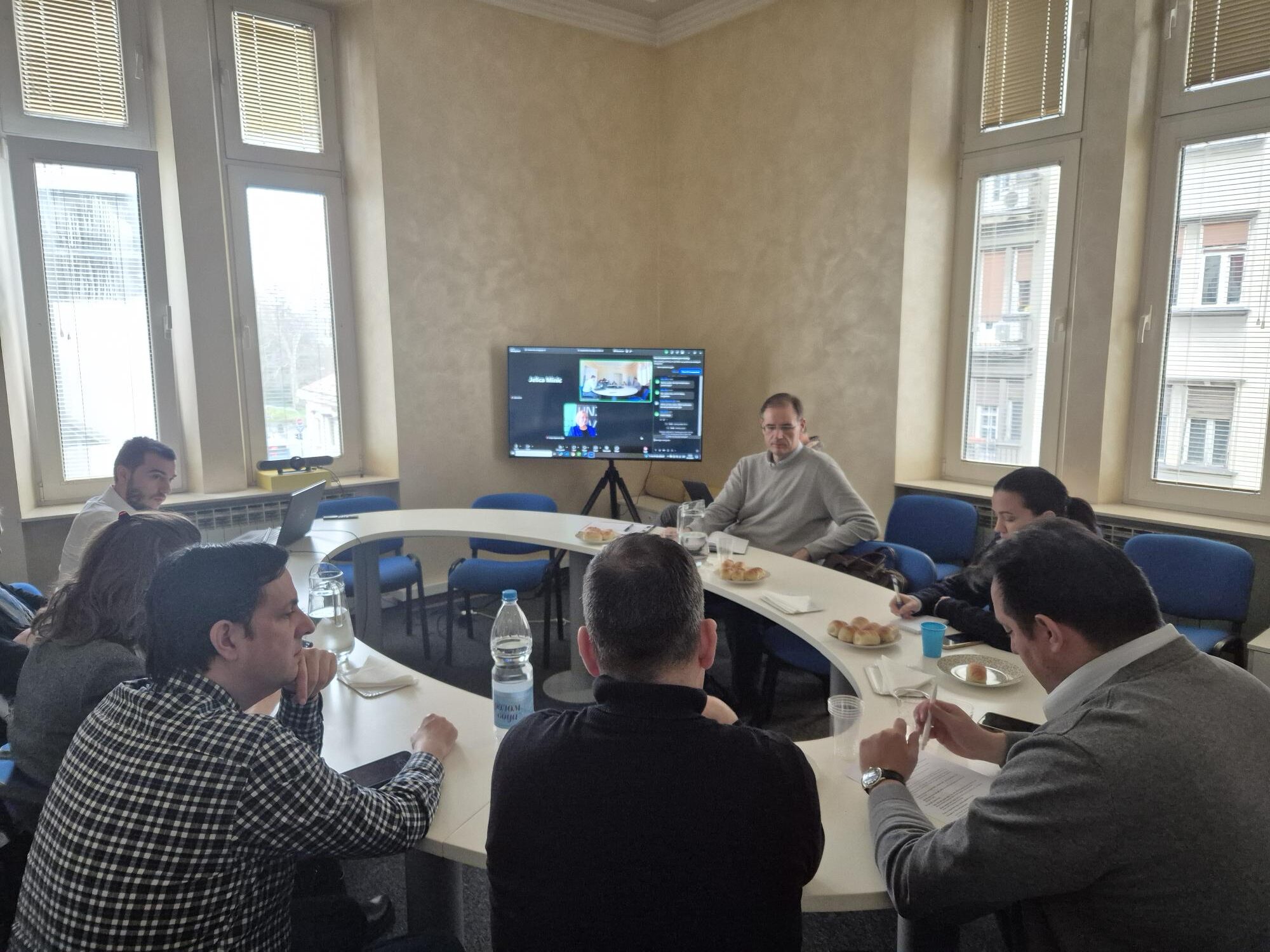
The Working Group of the National Convention on the EU for Chapter 31 (Foreign, Security and Defence Policy) held a regular meeting dedicated to the analysis of Serbia’s foreign policy positioning, transparency in the field of arms trade, and the level of alignment with the European Union’s Common Foreign, Security and Defence Policy (CFSP).
The Working Group expresses concern over the continued lack of transparency in the export of arms and military equipment, particularly regarding exports to regions where mass violations of human rights and international humanitarian law have been documented.[1] Transparency in this field is not only a legal obligation, but also a key prerequisite for maintaining trust and stable cooperation in Europe and the Western Balkans region.
Of particular concern is the fact that the Ministry of Internal and External Trade does not regularly submit annual reports to the Government on the export and import of arms and military equipment, as well as dual-use goods. At the same time, these reports have not been publicly available since 2022, despite the obligation to regularly submit them to the National Assembly and publish them in the Official Gazette. The document published in April 2024 refers precisely to that same year, further indicating delays and a lack of timeliness.
Additional concern is raised by violations of the moratorium on the export of arms and military equipment, introduced on 23 June 2025. Namely, numerous media reports indicate that exports continue selectively, through privileged private actors, which seriously undermines the credibility of the control system and opens space for potential abuses.
In the context of ongoing international conflicts and the global energy crisis – including the attack by Israel and the United States on Iran, and the subsequent escalation of Iranian military attacks on countries of the Persian Gulf – the Working Group points to the need for a clear, principled and consistent foreign policy stance by Serbia. This includes the need for Serbia to condemn armed aggression against sovereign states, advocate for respect for the territorial integrity and sovereignty of UN member states, and uphold international (humanitarian) law, particularly the protection of civilian populations in armed conflicts.
Although Serbia officially insists on a policy of balanced relations, in practice the state leadership has been intensively developing political, economic and security cooperation with Israel, including a significant increase in arms exports to this country in the period from 2023 to 2026. This discrepancy between declaratory and actual policy further complicates Serbia’s international position and may negatively affect its credibility in international relations.
With regard to alignment with the EU CFSP, the Working Group for Chapter 31 notes that Serbia reached a 67% alignment rate with relevant declarations and measures in 2025. Although this result represents a certain degree of progress, Serbia continues to record the lowest level of alignment among candidate countries (excluding Turkey). The Working Group also points out that this result has been achieved partly through retroactive alignment, rather than through a consistent and systematic conduct of foreign policy. This is confirmed by data from the first half of the same year, when alignment stood at 52%, accompanied by a lack of alignment with the majority of declarations concerning Russia, China and Iran. Such practice places a long-term burden on relations with the European Union and undermines the credibility of Serbia’s own reform process.
Based on these findings, the Working Group for Chapter 31:
- – calls on the competent institutions to ensure full and regular transparency in the field of trade in arms and military equipment, including the timely publication of reports and the strengthening of oversight mechanisms;
- – recommends clearer and more consistent foreign policy positioning in line with international law and obligations arising from the European integration process;
- – points to the need for predictable, principled and continuous alignment with the EU CFSP, abandoning the practice of retroactive accession.
The Working Group will continue to monitor developments in these fields.
Working Group of the National Convention on the EU for Chapter 31
[1] According to Article 17 of the Law prescribing the grounds for granting or denying a permit for the export of arms and military equipment.